
The Lowest Carbon Data Centres in Britain
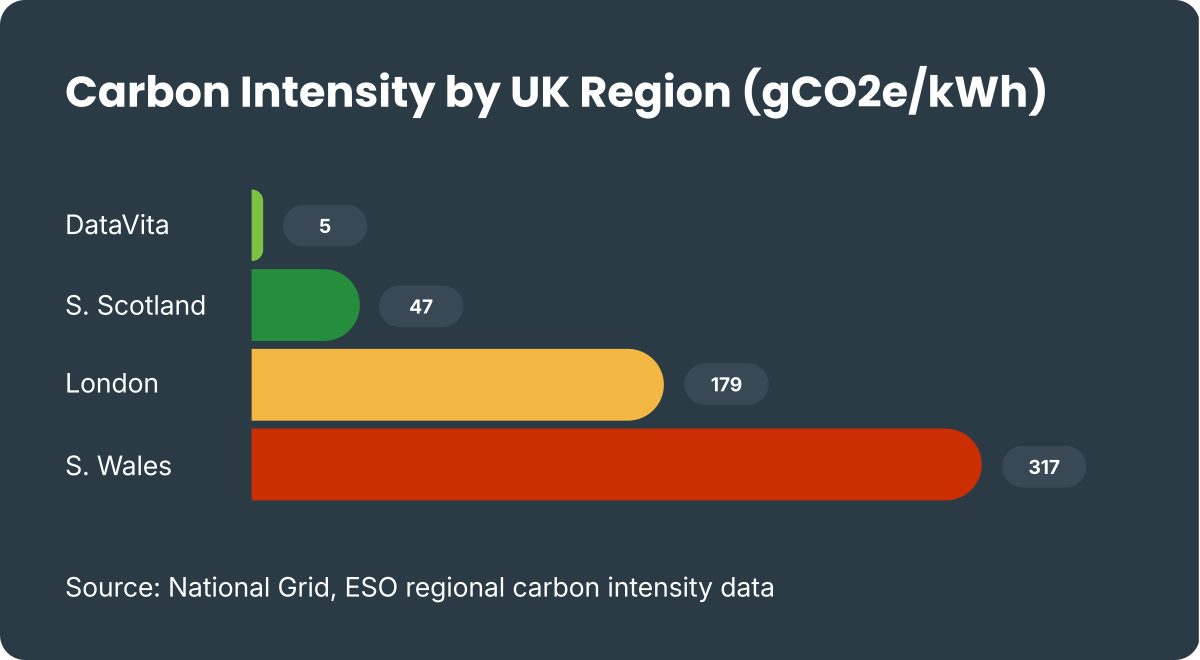
Location matters. By combining Scotland's already-clean grid with our own private wire renewables, we're designing for carbon intensity among the lowest in the UK.
A 250MW data centre at the Lanarkshire AI Growth Zone produces just 11,000 tonnes of CO₂ per year, compared to 392,000 tonnes for the same facility in London. That's 381,000 tonnes saved annually.
3.8M tonnes
190,000
18M
Near-Zero Water Consumption
One of the biggest concerns about data centres is water usage. Many facilities use millions of litres daily for cooling. We've designed ours differently.
.svg)
.svg)
.svg)
.svg)
How It Works
Our closed-loop system recirculates the same water continuously. Heat from the servers is transferred to dry coolers, which release it into the air. No water is consumed or evaporated.
Scotland's Natural Advantage
Scotland's cooler climate means our dry coolers work efficiently year-round. For most of the year, we can use free air cooling with no mechanical refrigeration.
WUE: Near Zero
Water Usage Effectiveness measures litres of water per kWh. Traditional data centres score 1.8+. Our target: as close to zero as possible.
Cooler Climate, Lower PUE, Greater Profitability
Scotland's naturally cool climate reduces the energy required to support the data centre, adding to the efficiency of our AI data centre model.
Cooler ambient air allows us to maximise "free cooling" for the vast majority of the year. When you put Scotland's climate advantage into pounds and pence, it translates to a direct saving of 1.5p per kWh compared to operating in London.
For a 120 MW IT load, this adds up to more than 13.7 TWh over a 10-year term, equating to £189 million in additional savings. Compared to mainland Europe, the difference is even greater, worth around 3p per kWh.
Sub-1.18 PUE achievable without expensive mechanical cooling systems

Grid Positive by Design: Our Goal Is to Generate More Than We Use


Zero Fossil Gas
Unlike most data centres, we use no natural gas whatsoever. Our backup power comes from HVO (Hydrotreated Vegetable Oil), a renewable diesel made from waste cooking oils and fats. It's a low-carbon renewable fuel that drops straight into existing generator technology.
Going Further
Beyond energy and water, we're committed to minimising our environmental footprint in every way possible.

• Wildlife corridors connecting habitats
• Biodiversity net gain commitment

Our buildings are designed and constructed with sustainability in mind, using low-carbon materials and methods wherever possible.
• Low-carbon concrete and steel
• Locally sourced materials where possible
• Waste reduction and recycling targets
Stay Up-to-Date on the SAIZ Project


